

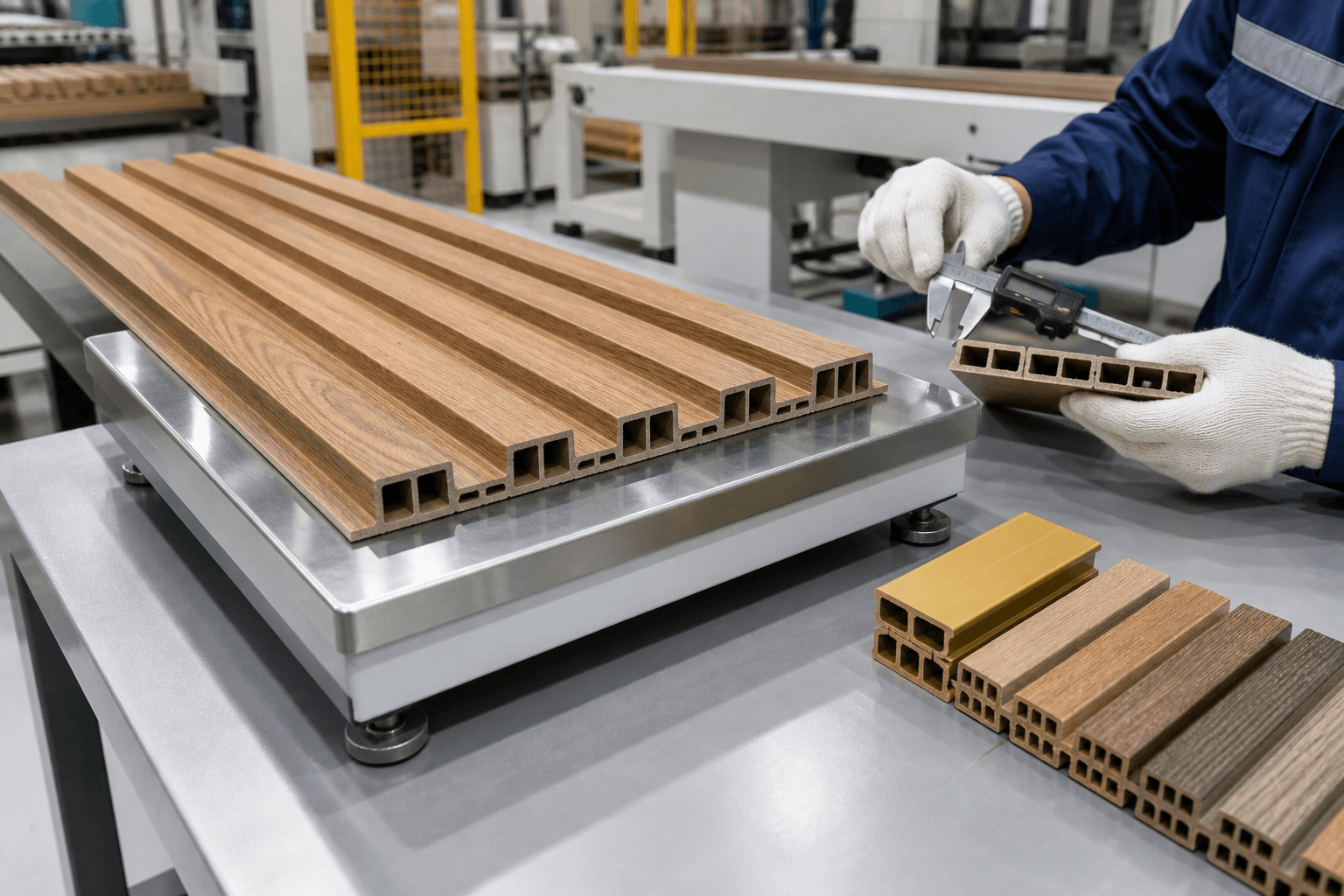
OEM PVC wall panel customization works best when the buyer defines a repeatable product, not just a desired look. Set the color reference, decor, surface finish, sheet build, and signoff process together. Then, connect each choice to a clear order code.
For example, a screen image can describe a style without defining the final color. A film name may also leave gloss and pattern direction unclear. So, use physical references and written limits before approving bulk production.
This guide focuses on color and film control for importers, distributors, and project buyers. For the wider sourcing process, begin with our PVC wall panel manufacturer guide.
Build a clear OEM PVC wall panel customization brief
First, separate the fixed features from those you can change. A retailer may need brand consistency across repeat orders. A hotel project may place more weight on matching a specific room palette.
Define the full product combination
List the core, nominal sizes, decor code, surface finish, edge detail, and cover film. Also, state the planned wall zone and fitting method. These details help the factory assess the request without guessing its use.
The custom logo PVC UV marble product lists an OEM product route for buyers to discuss. Use that page to name the right product family. Then, confirm the specific custom scope, count, and signoff stages for your order.
Keep commercial assumptions distinct from technical needs in OEM PVC wall panel customization. For example, a minimum order or sample charge may depend on the selected decor. Confirm those terms rather than applying one catalog statement to every custom request.
Give every approved variation a code
Create one product code for each size, decor, and finish combination. Then, use that code on quotes, samples, order sheets, and pack labels. A clear code prevents two visually similar products from sharing an unclear description.
Also, assign a version when any approved feature changes. Keep the old reference available for service and repeat order questions. This makes it easier to trace which version reached each project.
For a related material example, see our custom WPC panel guide. Its planning principles can help organize a brief. However, PVC film and process choices need their own product approval.
Match color and pattern with controlled references
Color is a key part of OEM PVC wall panel customization, but it needs a shared reference. Start with a physical target and record what makes it acceptable. Then, agree how both teams will compare later samples with that target.
Use project lighting and suitable sample sizes
Review the planned decor beside the planned floor, paint, furniture, and light source. Also, view it from normal room positions. A small chip can hide a large pattern repeat or a strong directional effect.
For marble designs, ask for a sample that shows enough of the pattern. Then, check vein scale, background tone, contrast, and repeat direction. If sheets must pair across a joint, approve that layout as a distinct detail.
The black UV marble PVC panel can serve as one specific finish reference. Confirm its current sample rather than relying only on the page image. A dark design may reveal reflections and small surface marks differently from a light design.
Agree the comparison method before production
Record the viewing light, sample position, and acceptable range for your color review. If instrument readings matter, define the method and acceptance limits with the right specialist. A color number without a test setup can cause disagreement.
Also, assess color and gloss separately when reviewing OEM PVC wall panel customization. ASTM D523 describes specular gloss measurement. It does not replace a color matching process or approve a particular product.
When developing a finish with ZHONGXINGWO, connect each sample comment to the product code and version. This gives both teams a practical record of the requested change. Avoid approving a revised sample with an unclear message such as “same as before.”
Specify the film build and check the finished surface
OEM PVC wall panel customization may involve a changed decor film, finish, or surface treatment. However, the same printed design can look other on another core or finish. So, approve the finished board rather than the loose film alone.
Name the layers and their purpose
Ask the seller to describe the planned core, decor layer, adhesive route, and finish. Then, record which features differ from the standard product. This helps the buyer understand what the custom request actually changes.
Do not assume all PVC wall panels use the same film process. Some product descriptions may use broad terms for other surface builds. Ask for the build of the exact product on your quote.
Also, check the finished edge and back face. A good front view may hide an edge detail that needs a trim. If the panel meets another material, show that junction in the sample wall system.
Review production samples against practical limits
Check print alignment, bubbles, lifting edges, trapped debris, and surface marks. Then, agree how the team will classify and handle visible defects. Use the project’s viewing conditions rather than inventing a universal defect limit.
| Control item | Signoff record | Later batch check |
|---|---|---|
| Color | Retained target and viewing setup. | Compare like conditions. |
| Pattern | Decor code and direction. | Check print and pack labels. |
| Finish | Approved look and test basis. | Review the finished board. |
| Film bond | Agreed product check and limits. | Follow the same check. |
| Edge | Approved cut and trim detail. | Check visible edge quality. |
If a seller proposes a other film or coating, reopen the right approval. A similar decor name does not prove the same finished result. So, treat a material substitute as a controlled change.
Move from sample approval to a repeatable bulk order
OEM PVC wall panel customization needs a clear release point. Before bulk work starts, agree which sample represents the order. Also, confirm the exact spec, count mix, packaging, check plan, and dispatch basis.
Keep development stages distinct
An early sample helps the buyer judge the design direction. A later production sample should show the planned finished build. Then, a retained reference helps the inspector check the shipment against the approved result.
Do not treat a design trial as proof of every product need. Sizes, film bond, finish, and any required performance claims need suitable checks. The evidence should refer to the correct product and planned use.
If the sample differs from the order spec, list the differences before approval. For example, a trial core may have another thickness. Keep that limitation visible so the team does not approve an unintended build.
Define check and change control
Agree the sampling plan, check points, and response to a failed check. Also, name who can approve changes on the buyer’s side. A verbal suggestion from one team member should not replace the approved product record.
For repeat orders, ask whether any core, film, finish, or process has changed. Then, compare the new batch with the retained reference before release. This matters when one project buys material in several phases.
Our WPC and PVC wall panel comparison can help distributors keep product families distinct. Use distinct technical files even when the products share a brand. A common logo does not make their fitting or performance needs identical.
Protect branding, packing, and repeat order records
Brand details are the final part of OEM PVC wall panel customization, not a substitute for product control. Labels should help staff name the material and use it correctly. Also, confirm exactly where the logo will appear before printing.
Check artwork and labels before release
Approve a proof for the carton, cover film, label, or insert that carries your artwork. Check spelling, product code, size, decor, count, and any required handling details. Then, connect the artwork version to the product version.
Avoid printing unverified certification, fire, or waterproof claims on the pack. Product claims need evidence that matches the actual build and market. If a required statement remains open, settle it before the artwork goes to print.
Also, confirm who owns the artwork and who may use it. Keep any exclusivity agreement specific about design, market, duration, and scope. A custom sample by itself does not establish those commercial rights.
Create a file that supports the next shipment
- Keep the approved product and artwork versions together.
- Save the retained sample code and signoff date.
- Record the film, finish, size, and packing choices.
- Match check notes to the right production batch.
- Keep intake photos and any agreed fix.
Finally, review the first shipment before placing an unchanged repeat order. Check whether the product, labels, and packing worked for the installer and intake team. Feed those findings into a clear version rather than a scattered message history.
Good custom sourcing turns a visual idea into a product that both teams can name and check. That record helps protect the design intent across larger or repeated orders. It also makes later repairs and stock matching easier to manage.
Need help planning OEM PVC wall panel customization for your brand? Send us an inquiry with your finish brief and artwork needs. Our specialists will reply and help you review the custom scope.
