

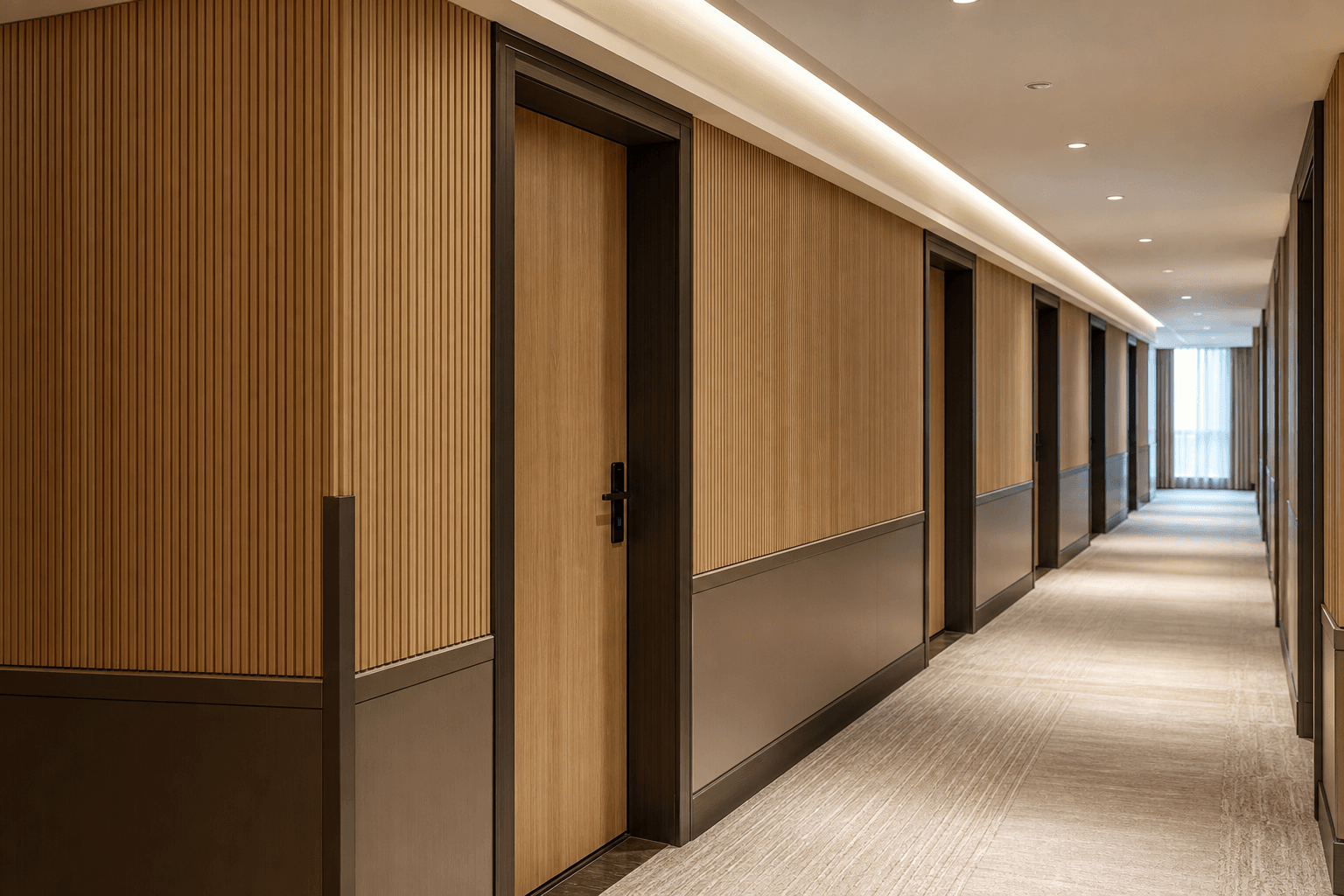
Think of this hotel renovation PVC marble sheet case study as a scheduling playbook. It is not one hotel’s story. It shows how renovation teams typically compress wall upgrades into short windows between bookings.
PVC marble sheets give a stone look at a fraction of marble’s weight. Installers glue or clip large panels over existing walls. For hotels, that means faster room turnovers and less demolition dust.
Because this topic belongs to our commercial wall panel application guide, the focus stays on execution logic. You will find sequencing, surface prep, and upkeep notes. Use them to plan phased floor upgrades.
Why PVC Marble Sheets Suit Fast Hotel Renovations
Hotels lose revenue every day a floor stays closed. Wet trades like plaster and paint stretch timelines. Dry panel systems cut that downtime sharply.
Large-format sheets cover old finishes in one pass. A 1220 by 2440 millimeter panel replaces many square meters fast. Fewer joints also mean fewer grout lines to clean later.
Weight matters on upper floors. Stone slabs need strong fixings and hoisting plans. PVC sheets are light enough for two installers to handle.
The UV marble sheet range covers the popular stone patterns. Calacatta, black marquina, and beige travertine looks lead demand. One range keeps every floor visually consistent.
A Typical Guest-Floor Retrofit: Keeping the Schedule Short
Picture a hotel refreshing twenty rooms on one floor. The target is ten working days. The sequence below shows how teams usually hit it.
- Strip loose wallpaper and fill major dents on day one.
- Prime dusty walls so adhesive bonds evenly.
- Set a laser level line for the first sheet course.
- Cut sheets around sockets and switches with a fine blade.
- Bond panels with MS polymer adhesive in vertical beads.
- Roll each sheet flat to push out trapped air.
- Fit aluminum trims at corners and window reveals.
- Seal wet-area edges with sanitary silicone.
Two crews leapfrog rooms to keep adhesive curing time productive. While one room’s panels set, the next room gets prepped. So no crew ever stands idle.
For curved columns or reception desks, flexible bendable marble-texture panels wrap without cracking. The decorative PVC marble sheet in 1220 by 2440 covers most flat walls. Dark lobbies pair well with the modern black UV marble PVC panel.
PVC Marble Sheet vs Real Marble: What Changes on Site
The visual gap has narrowed a lot. High-definition printing now mimics veining convincingly. Guests rarely spot the difference at normal viewing distance.
What changes is the install behind the surface. Real marble needs wet cutting, heavy lifting, and sealing. PVC sheets need a flat substrate and the right adhesive. Labor skill shifts from masonry to fit-out.
PVC itself is a well-understood polymer for building products. The polyvinyl chloride reference covers its basic properties. For panels, the key traits are moisture resistance and easy machining.
Cost structure changes too. Our cost comparison guide breaks down the numbers. Read the PVC Marble Sheet vs Real Marble: Material Cost, Freight, and Installation ROI Comparison before finalizing budgets.
Surface Prep and Install Checks That Prevent Callbacks
Most panel failures trace back to prep, not the sheet. A flat, dry, dust-free wall bonds reliably. Skipping prep invites bubbles and edge lift.
Run these checks before the first tube of adhesive opens:
- Moisture meter reads below the adhesive maker’s limit.
- No flaking paint or loose plaster remains.
- Wall flatness stays within 3 millimeters over 2 meters.
- Room temperature sits in the adhesive’s working range.
- First-sheet level line is marked on every wall.
- Cut edges get sealed before wet-area install.
Also protect finished sheets during the remaining fit-out. A thin film or cardboard shield stops scratches. Remove it only at final handover.
Cleaning and Upkeep in High-Turnover Rooms
Housekeeping teams clean rooms daily, so surfaces must forgive. Marble-look PVC wipes down with a damp cloth. No sealing or polishing cycles are needed.
Avoid abrasive pads on gloss finishes. They dull the print layer over time. A neutral cleaner handles most marks.
Keep spare sheets from the same batch on site. If a panel gets damaged, one sheet swaps out fast. So note the batch code at handover.
ZHONGXINGWO supplies marble-sheet systems with matching trims and install guides. Batch-consistent patterns matter across big orders. Ask for batch control when rooms must match exactly.
Planning the Next Phase Without Rework
Start with the highest-revenue floors. Their payback is fastest. Then roll the same system to lower floors.
Document every detail that worked. Adhesive type, trim profiles, and batch codes go in the file. The next phase then repeats without guesswork.
Also align with soft refurbishment cycles. New walls plus new soft furnishings read as a full renovation. Guests notice the whole room, not just panels.
Photograph each finished room type. The photos brief the next crew faster than words. They also help marketing show the refresh.
Finally, review the program with the hotel team. Capture what slowed you down. The next floor then runs even faster.
Keeping Pattern Consistency Across Large Orders
Big hotels order hundreds of sheets. Pattern drift between batches ruins the effect. So batch control is a procurement rule, not a wish.
Insist on one production batch per floor. Suppliers can hold stock for phased call-offs. Put that commitment in writing.
Check sheets under the same light before install. Daylight and warm LEDs show color differently. Approve the match in the actual room light.
Number the sheets as they arrive. Install in sequence across the wall. That keeps veining flowing naturally from panel to panel.
Reject sheets with visible print flaws at delivery. Catching them early avoids mid-install swaps. A quick daylight check per box takes minutes.
Store accepted sheets flat and dry. Leaning stacks can bow over time. Good storage keeps every panel install-ready.
Label each stack by room and wall. Installers grab the right sheets first try. That small habit saves real hours.
Working Around Guests: Noise, Dust, and Night Shifts
Occupied hotels need quiet methods. Panel install is already cleaner than wet trades. Still, cutting and drilling make noise.
Set up a cutting station far from guest rooms. A service corridor or back-of-house area works well. Cut all sheets there, then carry finished pieces in.
Reserve noisy tasks for the midday window. Most guests are out between late morning and afternoon. So schedule drilling for those hours.
Night shifts suit silent prep work. Measuring, marking, and trim cutting need no power tools. Crews can prep the next day’s rooms overnight.
Dust control is simple but non-negotiable. Vacuum as you cut, not after. Seal room doors with tape while adhesive cures.
What to Include in the Panel Specification
A tight spec prevents substitution games. It also lets you compare suppliers fairly. Write it before requesting quotes.
Cover these points in the document:
- Sheet size, thickness, and edge profile.
- Print pattern code and gloss level.
- Fire test standard the project must meet.
- Adhesive type and approved brands.
- Trim profiles for corners, joints, and reveals.
- Batch-control rule: one batch per floor.
- Spare-sheet quantity, usually two percent.
Attach room drawings with panel layout. Mark where each pattern goes. Installers then work without daily questions.
Also define acceptance criteria. Agree what counts as a defect before work starts. That avoids end-of-job arguments.
Training Housekeeping on the New Surfaces
New walls need new cleaning habits. Brief the housekeeping team before handover. A ten-minute demo prevents years of damage.
Show which cleaners are safe. Neutral pH products work on most sheets. Bleach and solvents do not belong on printed surfaces.
Demonstrate the right cloth. Microfiber lifts dust without scratching. Reorder it through the usual supplies channel.
Explain what to report. Loose trims or lifted edges need quick fixes. Early reports keep small issues small.
Leave a one-page care card in the maintenance office. New staff learn the routine fast. So the finish stays sharp for years.
Common Questions From Hotel Operators
Q: How fast can one room be done?
A: A standard room often takes one to two days. Prep quality decides the pace. Well-prepped walls let installers move fast.
Q: Do guests need to leave the floor?
A: Not always. Work room by room with dust control. Keep one buffer room empty between work zones and guests.
Q: Will the print pattern match across sheets?
A: It should, within one batch. So order each floor from a single batch. Note the batch code at delivery.
Q: How do sheets handle bathroom steam?
A: PVC resists moisture well. Still, seal all cut edges in wet zones. Use sanitary silicone at tub and basin joints.
Q: Can we install over old tiles?
A: Yes, if the tiles are firmly bonded. Fill grout lines or level first. The sheet then bonds to a flat face.
Q: What if a pattern gets discontinued?
A: This is why batch spares matter. Order the two percent spare at the start. Store them flat in a dry room.
Planning a fast hotel wall upgrade? Send us an inquiry with your project details. Our specialists will reply and help you.
