

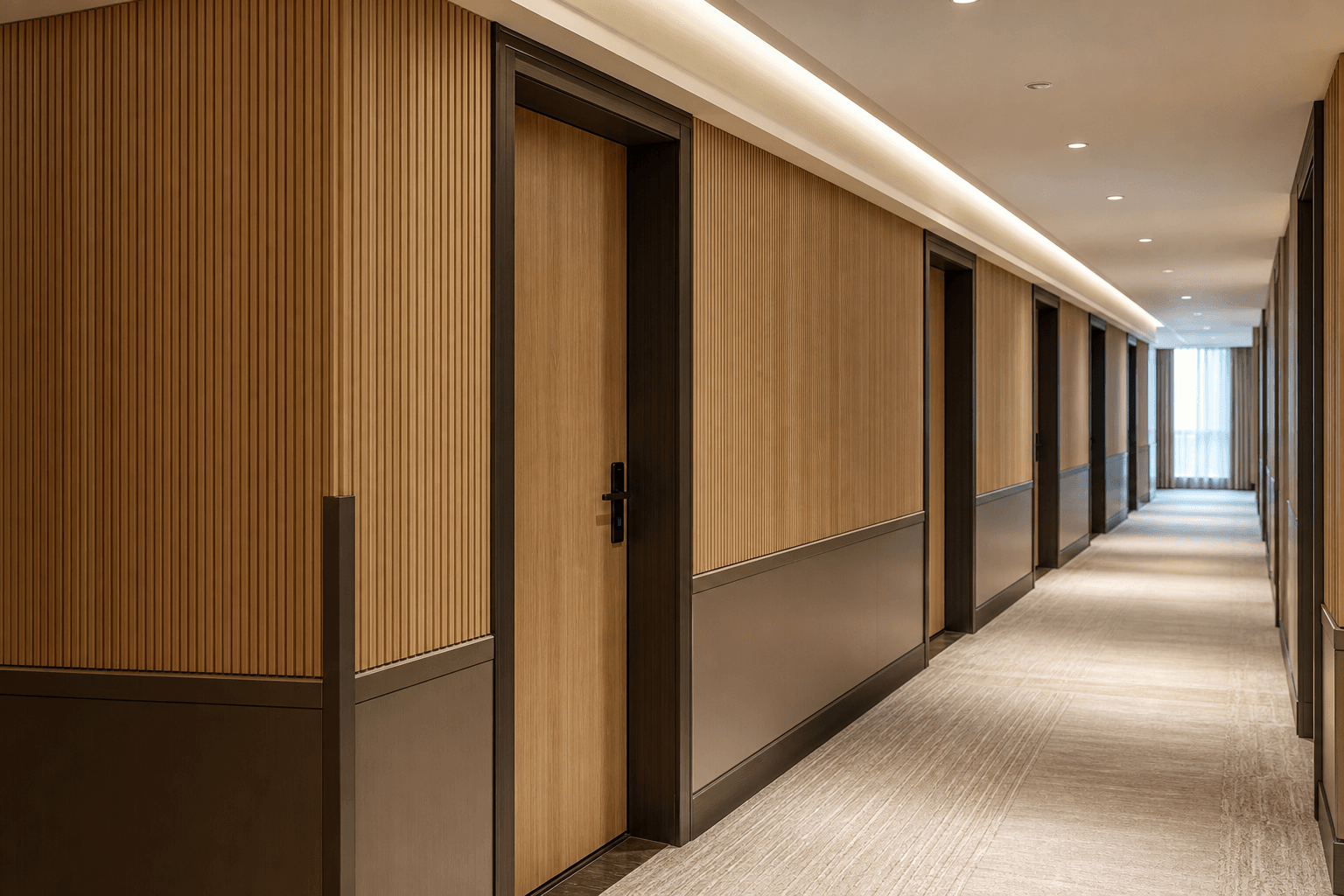
Distributors who stock interior wall panels face a clear choice. The bamboo charcoal vs wpc wall panel debate shapes buying lists. Hotels, shops, and homes all stock these boards. This guide compares them side by side so you can match each board to the right project.
Bamboo charcoal panels use bamboo fiber, resin, and mineral fillers. Carbonized bamboo fiber gives the core its dark tone and light weight. A printed film forms the visible face, from wood grain to stone or metal looks. The board stays rigid and flat in normal indoor rooms.
WPC panels blend wood fiber with plastic resin for a wood-like feel. The mix resists water better than plain timber boards. WPC also takes printed films and groove profiles, and it serves indoor walls and covered outdoor areas. The ASTM D7031 standard exists for the evaluation of WPC profiles, so ask suppliers which test reports cover their boards.
For the full buying picture, read this complete buyer’s guide to bamboo charcoal wall panels. It covers specs, sizes, and ordering steps for carbon crystal boards. This comparison stays neutral and practical. It uses material facts, not sales claims, to guide your choice.
Bamboo Charcoal vs WPC Wall Panel: Material Makeup and Surface Finishes
The bamboo charcoal vs wpc wall panel choice starts with the core. Bamboo charcoal boards blend carbonized bamboo fiber with PVC resin and mineral fillers. The fiber keeps the board light and stable, while WPC boards blend wood fiber with plastic resin instead. The plastic share gives WPC a tougher, denser feel in the hand.
Core Materials at a Glance
Both boards use fiber, resin, and fillers in different shares. Bamboo charcoal boards lean on bamboo fiber for light weight. WPC boards lean on wood fiber and plastic for a wood-like touch, and neither board is solid timber. Neither board needs paint after install, so buyers should ask for a data sheet that lists the core mix.
Surface Finishes and Looks
Printed films give both boards their visible style. Wood grain suits warm hotel rooms and homes, while marble and stone prints suit lobbies and shops. Metal texture prints suit modern offices and showrooms. A metal texture carbon crystal panel shows how sharp these prints can look.
Film quality matters more than the print pattern. A good film shows even color and sharp detail. A weak film may peel at edges or fade in strong light. Ask suppliers for a sample of the exact finish, and compare two boards side by side before you order.
The bamboo charcoal vs wpc wall panel look stays close in photos. In hand, WPC feels denser and cooler to the touch, while bamboo charcoal boards feel lighter and warmer. Show clients real samples, not only photos. Touch and weight guide the choice well.
Where Each Panel Fits: Interior Uses for Hotels, Shops, and Homes
The bamboo charcoal vs wpc wall panel question matters most at the project level. Bamboo charcoal boards suit dry indoor walls in hotels, offices, shops, and homes. They work well for feature walls, corridors, and reception areas. WPC boards cover the same indoor uses and add covered outdoor spots.
Hotel corridors need boards that look good and stay flat. A printed wood film warms a long corridor without real timber costs. Bamboo charcoal boards fit this role well in dry, heated spaces. WPC boards hold up where trolleys or cleaning gear may bump the wall.
The bamboo charcoal vs wpc wall panel mix also fits mixed-use buildings. Offices sit beside shops and homes in one tower, and each floor may need a different board. A single supplier who stocks both boards saves time. One order can cover the whole building.
Rooms That Suit Bamboo Charcoal Boards
Bedrooms, living rooms, and meeting rooms suit bamboo charcoal boards best, since these rooms stay dry and hold steady heat. The boards add a warm finish without heavy weight on the wall. A 5mm/8mm water ripple board shows a light decor option for such rooms. Keep the boards away from direct water spray and steam.
Rooms That Suit WPC Boards
WPC boards suit the same dry rooms plus damp-prone spots. Bathrooms with good airflow, kitchens, and laundry areas are fair uses, and covered balconies and porch ceilings suit WPC boards. The plastic share resists swelling better than plain wood fiber boards. Still, check the supplier data sheet for each exact product.
Compare the two boards on use, not on brand claims. The right pick follows the room, not the trend.
Moisture, Cleaning, and Daily Wear Compared
The bamboo charcoal vs wpc wall panel debate often turns on water. Bamboo charcoal boards handle normal indoor humidity well, but they are not made for wet walls or direct spray. WPC boards resist water better thanks to their plastic share. That edge matters in kitchens, wash areas, and covered outdoor spots.
Cleaning stays simple for both boards. Wipe the face with a soft, damp cloth, and avoid harsh solvents and rough pads that may dull the film. Dry the surface after cleaning in damp rooms. A quick wipe keeps prints bright and joints clean.
Scratches, Stains, and Fading
Daily wear shows first at corners and low wall zones. Both films can scuff when hard goods drag past them. WPC boards often feel tougher at the surface, while bamboo charcoal boards need care where carts pass close. Ask for wear data in the supplier test report.
Sunlight fades prints over time in bright rooms. Keep boards out of direct sun where you can, since curtains or shaded glass help prints last longer. Stains from food or drink wipe off fresh films fast. Old stains need more care, so clean spills at once.
- Wipe spills at once to stop stains from setting.
- Use a soft cloth, not a wire brush, on printed films.
- Keep boards dry at joints and behind fixed furniture.
- Check corners each month in busy hotel corridors.
The bamboo charcoal vs wpc wall panel care routine stays much the same. Both boards need dry joints and quick spill wipes, and both boards dislike harsh cleaners and rough pads. The main gap is water tolerance, not cleaning steps. Train your installers on one care note for both boards.
Installation and Maintenance: What Installers Should Know
The bamboo charcoal vs wpc wall panel choice also affects install time. Both boards cut with standard wood tools, and both fix to battens or flat walls with clips or glue. Groove edges help boards line up fast. A trained crew can finish a room in less time than wet trades.
Check the wall before you start. The wall must be flat, dry, and clean. Fix battens level so boards sit true, and leave a small gap at edges for slight movement. Seal joints in damp rooms with a rated sealant.
The bamboo charcoal vs wpc wall panel install kit stays simple. Crews need a saw, a level, clips, and sealant, with no wet trades and no long drying waits. Keep spare clips and sealant on site. A small kit cuts call-backs after handover.
Cutting, Fixing, and Joint Care
Measure twice and cut once to limit waste. Support thin boards well while cutting to stop edge chips. Test one board on the wall before a full run, and check the print match across joints in good light. Replace a poor board at once, not after the row is done.
Upkeep After Handover
Hand the client a short care note with each job. List the right cleaner and the cloth type. Note which rooms suit damp wiping and which need dry dusting. Keep spare boards from the same batch for repairs, since a batch match keeps print color true after a fix.
For full specs before you order, read this carbon crystal panel specifications guide. It lists thickness, sizes, and density checks in one place.
How Distributors Choose by Project Type
The bamboo charcoal vs wpc wall panel pick should follow the project brief. Hotels want warm looks, fast install, and steady supply, while shops want bold prints and tough low walls. Homes want light boards and clean joints. Match the board to the brief, not to a single best seller.
Stock both boards when your clients span hotels and homes. Keep bamboo charcoal boards for dry feature walls, and keep WPC boards for damp rooms and covered outdoor work. A mixed stock lets you quote fast and fit each room. Track which board sells best in each client group.
A carbon crystal board vs wpc panel check helps at quote time. Compare the core, the film, and the test reports side by side. Note the thickness and size each project needs. Price follows the spec, so quote from the data sheet, and clear specs cut disputes after delivery.
A bamboo charcoal panel vs wpc interior check fits home projects. Look at room use, light, and damp risk first. Bedrooms suit bamboo charcoal boards well, while kitchens and wash areas lean toward WPC boards. Use the room list to brief your sales team.
Compare both boards with a wider lens too. Read this WPC vs PVC wall panel comparison for a second material view. It helps when a client asks about PVC as well. Then return to the room brief to make the call.
| Project type | First pick | Why it fits |
|---|---|---|
| Hotel bedroom | Bamboo charcoal board | Warm look, light weight |
| Hotel corridor | Bamboo charcoal board | Flat face, fast install |
| Shop front | WPC board | Tough low wall zone |
| Kitchen or wash area | WPC board | Better water resistance |
| Covered balcony | WPC board | Handles damp air well |
The bamboo charcoal vs wpc wall panel choice stays simple with a clear brief. Note the room, the damp risk, and the look first. Then check stock, size, and test reports. A short brief keeps quotes fast and fair, and your clients get the right board for each room.
Plan your stock by season and project pipeline. Hotels refit in quiet months and need fast supply, while shops refit before peak sales and need bold prints. Homes order through the year in small lots. A clear stock plan keeps both boards on hand.
ZHONGXINGWO supplies wall panels for distributors and project buyers. Ask our team for samples, data sheets, and test reports. Compare the boards in hand before you place a bulk order.
Need help with bamboo charcoal panel sourcing? Send us an inquiry with your project details. Our specialists will reply and help you.
