

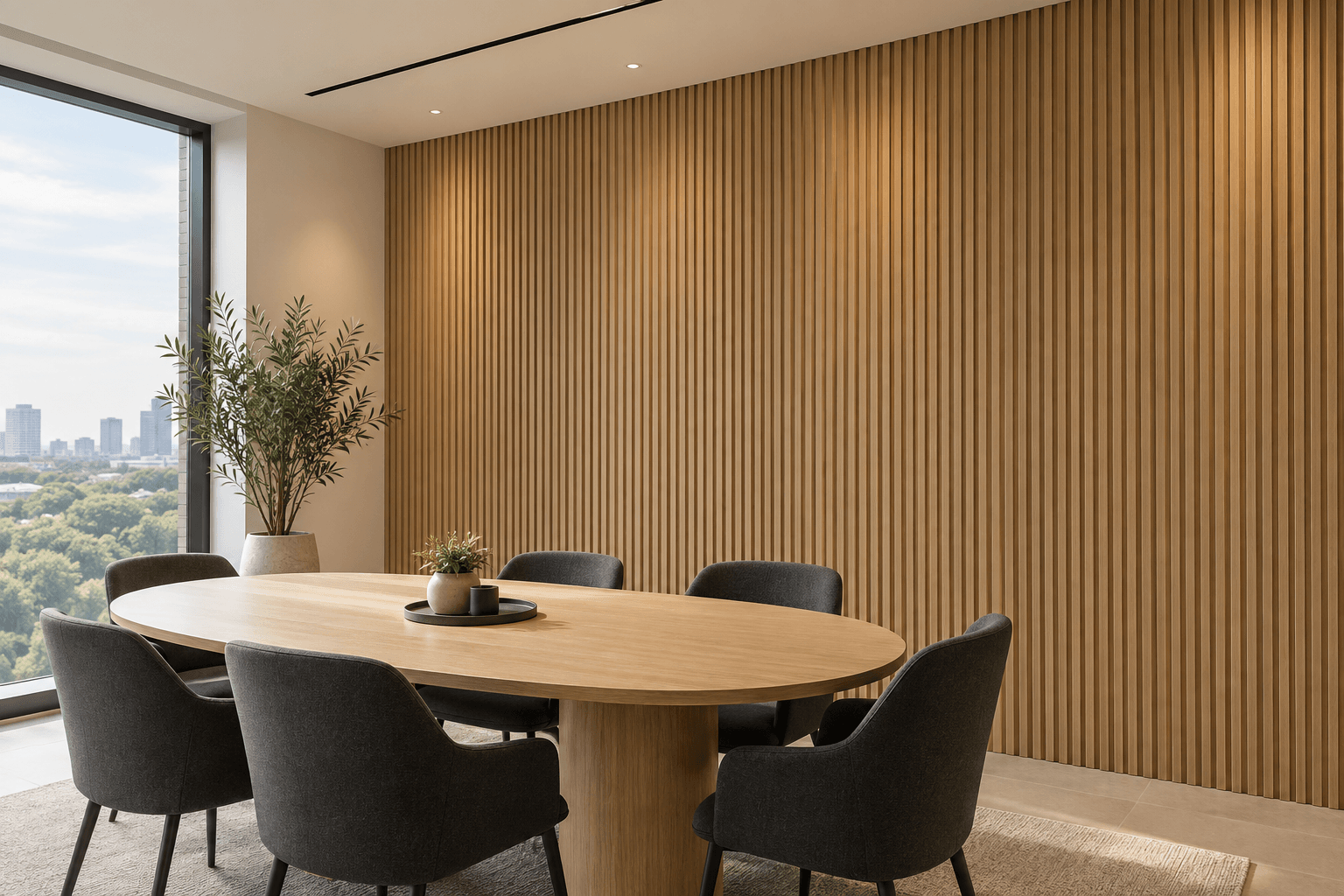
If you source interior wall panels for resale or for projects, this guide will help you compare options with confidence. A bamboo charcoal wall panel supplier can offer boards that look like wood, marble, or metal. These boards suit hotels, shops, offices, and homes. They install faster than tile or solid wood in many jobs. This guide covers panel structure, sizes, quality checks, and ordering steps. Use it to brief factories, compare quotations, and avoid common buying errors.
Buyers often face wide price gaps between suppliers. The gaps usually reflect core quality, surface film, thickness, and order size. A clear specification sheet makes comparison much easier. Ask every supplier for the same details before you compare prices. This guide shows which details matter most, and which documents you should request before you place an order.
This guide suits distributors, wholesalers, importers, and project buyers. It also suits contractors who install panels for clients. A bamboo charcoal wall panel supplier should serve all these buyer types with clear stock and pricing. If you buy for one project only, focus on finish, size, and test reports. If you buy for resale, focus on stock depth and reorder speed too.
What Are Bamboo Charcoal Wall Panels and Carbon Crystal Boards?
A bamboo charcoal wall panel uses bamboo charcoal fiber in its core layer. The core is pressed into a rigid, even board. A carbon crystal surface layer sits on top of the core. A printed decor film gives the board its wood, marble, or metal look. A back layer helps keep the board flat over time.
Bamboo charcoal starts as bamboo fiber treated at high heat. The process creates a porous fiber structure. Peer-reviewed research on bamboo charcoal adsorption characteristics (PMC) studied Moso bamboo biochar and its porous nature in lab tests. Panel makers value the fiber mainly for its light weight and stable form.
The finished panel is an interior wall product, not a structural board. It works best on flat, dry interior walls. It is not a substitute for exterior cladding or load-bearing panels. For a deeper look at structure and finishes, read this spec and quality guide for carbon crystal panels. It explains core layers, surface types, and common defects.
Buyers sometimes confuse these panels with plain PVC sheets. The key difference is the bamboo charcoal fiber core. That core gives the board a firmer feel and a more even surface. A bamboo charcoal wall panel supplier should explain the core mix in plain terms. Ask for the core composition, board density, and surface film type in writing.
Installation is simple for trained teams in most interior jobs. Boards fix to battens or flat walls with glue and trim profiles. Joints hide behind matching trim strips for a clean finish. A bamboo charcoal wall panel supplier should share install guides and trim options. Ask for trim codes that match each finish you order.
Common Specs, Sizes, and Surface Finishes
Most bamboo charcoal wall panels come in long, flat boards. Common widths range from 400 mm to 1220 mm. Common lengths range from 2400 mm to 3000 mm. Thickness usually falls between 5 mm and 10 mm. Thicker boards feel more rigid and suit high-traffic areas better.
Surface finishes drive the final look of a project. Wood grain suits warm hotel rooms and homes. Marble patterns suit lobbies, shops, and feature walls. Metal and mirror finishes suit modern retail and office spaces. Water ripple patterns add texture to bars and showrooms. Choose the finish after you confirm the lighting and room style.
| Finish | Common size | Thickness | Best use |
|---|---|---|---|
| Wood grain | 1220 x 2800 mm | 5 to 8 mm | Hotels and homes |
| Marble pattern | 1220 x 2800 mm | 5 to 8 mm | Lobbies and shops |
| Metal and mirror | 1220 x 2900 mm | 5 to 9 mm | Retail and offices |
| Water ripple | 1220 x 2800 mm | 5 to 8 mm | Bars and showrooms |
Always confirm the exact size before you order. Some factories cut boards to project sizes for a fee. Others sell only standard sizes in full cartons. A bamboo charcoal wall panel supplier should state tolerances for length, width, and thickness. Small size gaps can cause visible joints on large walls.
Check the decor film quality as well. A good film shows sharp print detail and even color. A weak film may fade, peel, or scratch during install. Browse the full bamboo charcoal wall panel range to compare finishes side by side. Note the finish code for each option you shortlist.
Packing also affects your landed cost and damage rate. Ask how many boards fit in one carton. Ask about edge protection, pallet packing, and container loading. A bamboo charcoal wall panel supplier with export experience will answer these points clearly. Poor packing causes edge chips that waste time on site.
Daily care is simple for these interior boards. Wipe the surface with a soft, damp cloth. Avoid harsh solvents that may dull the decor film. A bamboo charcoal wall panel supplier should share care notes for each finish. Good care keeps showroom and hotel walls looking new longer.
Measure each wall before you order boards. Record wall height, wall width, and door or window cutouts. Add five to ten percent extra for cuts and waste. A bamboo charcoal wall panel supplier can help you check board counts. Share your wall plan when you ask for a quotation. Accurate counts reduce waste and avoid short delivery on site.
Quality Checks and Test Reports to Request
Quality checks protect your margin and your reputation. Start with a physical sample before a bulk order. Check the board edge, surface flatness, and print clarity. Bend a small offcut gently to test core strength. Look for voids, cracks, or uneven layers at the cut edge.
Next, request test reports from the factory. A bamboo charcoal wall panel factory should share recent reports on request. Ask for reports that match the exact product you plan to buy. Reports for a different board do not prove quality for your order. Keep copies of all reports with your purchase contract.
- Core density and thickness tolerance for the ordered board size.
- Surface adhesion, scratch resistance, and color fastness results.
- Formaldehyde emission test report for the finished panel.
- Fire performance test report, if the project requires one.
- Moisture resistance and flatness checks after storage.
Some sellers mention air purification, low formaldehyde, or fire ratings in sales talks. Treat each such statement as a claim to verify, not as a proven fact. Ask for the test method, test date, and testing lab name. If a supplier cannot share a report, do not repeat the claim to your own customers.
For a focused checklist, see this buyer’s quality guide to bamboo charcoal carbon crystal panels. It walks through core checks, surface checks, and sample steps. Use it together with your own sample inspection before you approve production.
Agree on an inspection step before shipment as well. Photos of loaded cartons help, but they do not replace checks. A third-party inspection suits large or first-time orders. A bamboo charcoal wall panel supplier should accept a clear inspection plan in the contract.
Approve a sealed sample before bulk production starts. Mark the sample with finish code, thickness, and size. A bamboo charcoal wall panel supplier should match bulk goods to that sealed sample. If bulk goods differ, raise the issue before shipment. Clear sample rules prevent disputes at delivery.
Applications and How to Order
These panels suit many interior projects. Hotels use them for rooms, corridors, and lobbies. Retail shops use them for feature walls and display areas. Offices use them for meeting rooms and reception walls. Homes use them for living rooms, bedrooms, and TV walls.
Distributors often stock the most popular finishes first. Wood grain and marble patterns usually sell fastest. Add metal or water ripple finishes after core stock moves well. Bamboo charcoal panel wholesale orders work best with a clear finish mix. Avoid stocking slow finishes in large volumes at first.
When you vet a carbon crystal panel manufacturer, ask about capacity and lead time. Ask about minimum order quantity per finish and per color. Ask about sample lead time and production lead time. A clear timeline helps you plan stock and project dates. A bamboo charcoal wall panel supplier should also confirm carton counts and container loads.
Share a full brief with your supplier before you request a quotation. Include sizes, finishes, quantities, and delivery port. Include your target market and any local test needs. ZHONGXINGWO supplies wall panels for distributors and project buyers. A good example is this metal-texture carbon crystal panel, which shows the finish and board style clearly.
Compare quotations on total landed cost, not on unit price alone. Add freight, packing, inspection, and port charges to each quote. Check payment terms, defect handling, and replacement rules. Put size, finish, quantity, and test needs in the final contract.
Plan reorders before your stock runs low. Popular finishes can sell out during peak project seasons. A bamboo charcoal wall panel supplier with steady stock helps you avoid gaps. Share your sales forecast when you discuss annual supply terms. Steady supply builds trust with your own trade customers.
Tell us your sizes, finishes, and target quantities. We will review your project details and reply with a clear quotation. Send us an inquiry today to start the discussion.
