

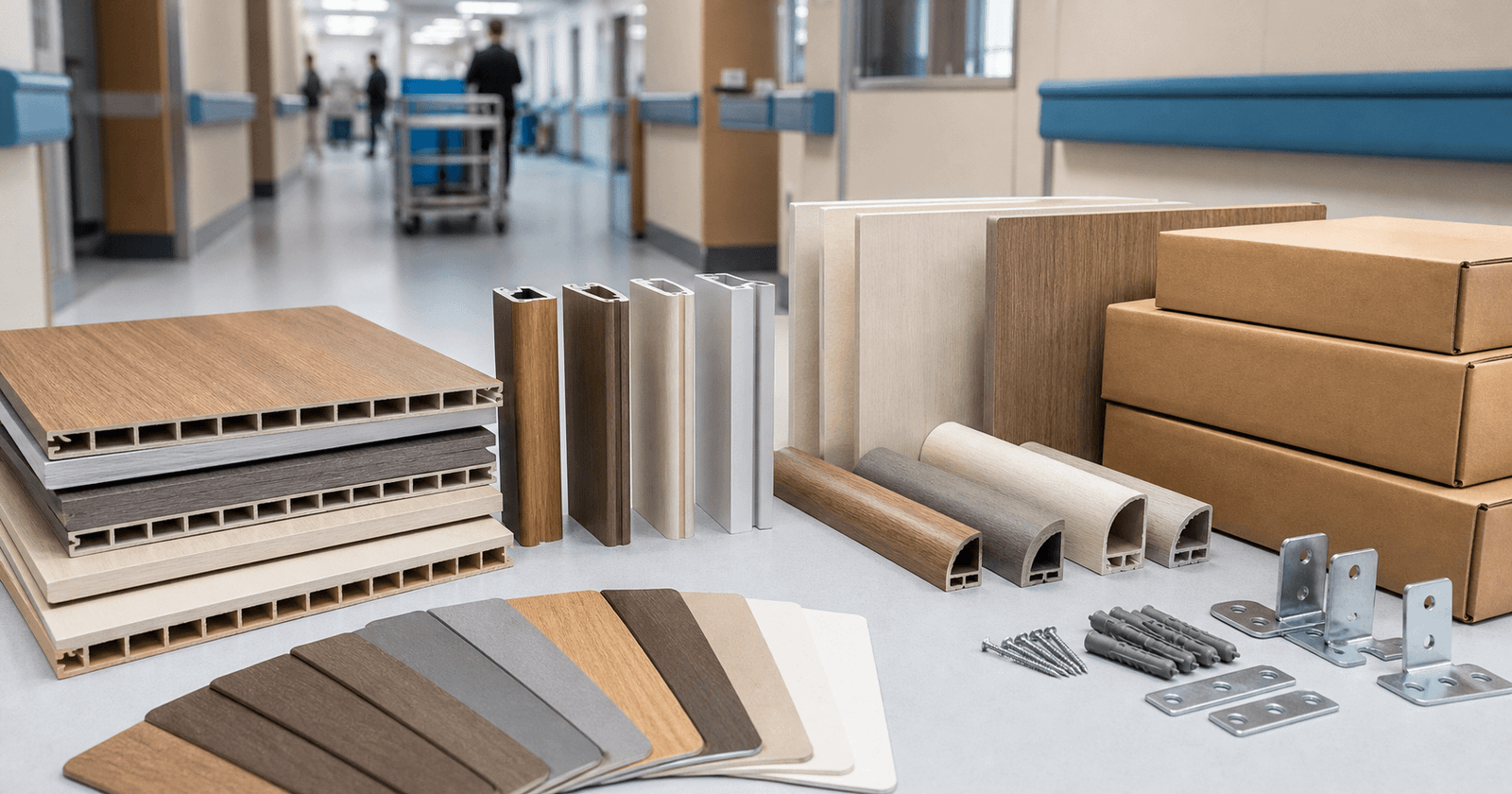
Hospitals, cleanrooms, and food plants need walls that fight germs, not just cover them. An antibacterial wall panel supplier serves that need with treated surfaces, sealed joints, and test reports. This guide explains how these panels work, where they belong, and how to choose a supplier with confidence.
Regular wall panels look clean but can harbor bacteria in joints and pores. Hygienic panels close those gaps. Their smooth face wipes clean, and their antibacterial agent slows germ growth between cleans. That pair of traits is why health and food projects specify them.
The rest of this guide turns those traits into buying checks.
What Makes a Wall Panel Antibacterial?
An antibacterial panel carries an active agent in its surface layer. Silver-ion additives are the most common choice. They release silver ions slowly over time. Those ions damage bacterial cell walls and block growth.
The effect lasts for the life of the panel face, not for one cleaning only.
The base board matters too. PVC sheets give a smooth, non-porous face. That face leaves germs nowhere to hide. It also resists water, so daily washing does not swell the board.
A good panel pairs a stable base with a proven agent. Ask your supplier to name both parts in writing.
Seams decide real hygiene. A panel can be antibacterial while its joints still breed germs. Welded or sealed joints close that gap. Coved corners at the floor stop dirt from settling in the angle.
So judge a hygienic system by its joints, not only by its face.
Agents enter the panel in two ways. Some mix into the PVC skin during extrusion. Others sit in a top coat applied after the board forms. Mixed-in agents last longer under scrubbing.
Ask which method your panel uses and why.
Do Antibacterial Panels Replace Cleaning?
No. Panels slow growth between cleans. Daily cleaning still removes dirt and germs. An antibacterial wall panel supplier should state this limit in writing.
Any seller who claims no cleaning is needed is overselling.
Where Hygienic Panels Are Required
Hospitals lead demand. Operating rooms, ICUs, and isolation wards need walls that stand up to daily disinfection. Corridors need impact resistance from beds and trolleys. An antibacterial wall panel supplier who serves hospitals should know both needs.
Ask for hospital references before you shortlist.
Cleanrooms come next. Pharma and electronics plants control particles and microbes at once. Wall panels there must shed few particles and clean fast. Smooth PVC faces suit that duty.
Check the panel’s chemical resistance too, since cleanroom cleaners are strong.
Food plants follow the same logic. HACCP rules demand surfaces that clean fast and stay smooth. Hygienic panels line processing halls, cold rooms, and packing zones. They must resist fats, acids, and hot washdowns.
Confirm the temperature limit before you order.
Schools and labs also buy these panels. Kitchens, labs, and washrooms all gain from wipe-clean walls. The volumes are smaller, but the checks stay the same. A supplier who serves hospitals can serve these jobs too.
Retrofit jobs differ from new builds. Old walls may hide pipes and uneven plaster. Panels glue over most flaws fast. New builds let you plan coves and drains from the start.
An antibacterial wall panel supplier should ask which job you face before quoting.
Cold rooms add one more test. Panels there face low temperatures and daily washdowns. The board must stay flat when cold. The joints must hold when hosed.
Ask for the low-temperature limit in writing before you order.
Corridors test impact daily. Beds, trolleys, and carts hit the same wall height. Add a crash rail at trolley height for busy routes. The rail takes the hit so the panel does not.
That small part saves many board swaps.
How to Read an Antibacterial Test Report
Every claim needs a report. The key standard here is ISO 22196:2011. It sets the method to test antibacterial activity on plastics and other non-porous surfaces. It measures how far a treated surface cuts bacterial growth versus an untreated control.
A result above 2 log reduction is a strong claim. Ask for the full report, not a summary line.
Check four facts on the report. First, the lab name and the test date. Second, the exact product name and batch. Third, the bacteria strains tested, such as Escherichia coli and Staphylococcus aureus.
Fourth, the log reduction value for each strain. If any fact is missing, ask for it. A real antibacterial wall panel supplier will share the report fast.
Also note the report scope. ISO 22196 tests the treated surface only. It does not test joints, backs, or installed walls. So pair the report with install details.
Sealed joints and coved corners complete the hygiene story.
Watch for weak reports. A supplier may show a test on a raw resin, not on the finished panel. Or the report may be ten years old. Ask for a report on the exact panel you will buy.
If the supplier stalls, treat the claim as unproven and move on.
Reports age. A test from five years ago may not match current production. Ask how often the supplier re-tests. Yearly re-tests show steady control.
Also ask if the report covers your exact thickness and finish. A thin board may test differently from a thick one.
Materials Compared: PVC, FRP, and HPL
Three materials dominate hygienic walls. PVC panels are light, smooth, and easy to weld. FRP panels are tough and resist impact well. HPL compact panels are dense and resist scratches.
Each suits a different zone. The table below gives a quick comparison.
| Material | Strengths | Watch out for |
|---|---|---|
| Antibacterial PVC | Smooth face, welded joints, light weight | Heat limit near steam lines |
| FRP panels | High impact strength, chemical resistance | Heavier install, fewer finishes |
| HPL compact | Scratch resistance, rigid face | Higher cost, joint sealing needs care |
PVC wins most hospital and food jobs on balance. It installs fast and seals well. FRP wins where trolleys hit walls daily. HPL wins where scratches matter most.
Match the material to the zone, not to the brochure. For PVC options, see our PVC wall panel manufacturer guide. It covers specs, finishes, and ordering steps.
Wet zones need extra care. Bathrooms and wash areas face daily water and steam. Our waterproof PVC wall panel bathroom guide shows how sealed PVC handles wet projects. The same sealing logic applies to hygienic walls.
Keep water out of joints and the system lasts.
Trims and profiles matter as much as boards. Corner trims, end caps, and weld rods finish the system. Order them in the same color and batch as the boards. Mismatched trims stand out in a white room.
Ask your supplier to list every trim on the quote.
Cost follows the zone. PVC costs less than HPL per square meter. FRP sits between the two on most quotes. An antibacterial wall panel supplier should quote install and sealing as separate lines.
Do not pick by board price alone. Install time and joint sealing change the real total. A cheap board with slow install can cost more in the end.
How to Choose an Antibacterial Wall Panel Supplier
Start with papers, not prices. Ask for the ISO 22196 report and the fire test report. Then ask for a list of hospital or food projects. A supplier with real project history will share photos and contacts.
A supplier with no history will change the subject.
Next, check the factory. Ask how the antibacterial agent is added and how each batch is checked. Ask whether the agent content is tested per batch or per year. Per-batch checks cost more, yet they prove steady quality.
That steady quality is what a hospital pays for.
Then test a sample. Wipe it with your own disinfectant and check the face after ten wipes. Scratch it lightly and see if the mark shows. Bend a corner piece to test its flex.
A sample tells you more than a sales sheet. Keep the sample beside the report when you decide.
Agree on payment and delivery terms early. A 30 percent deposit with balance before shipping is common. Confirm who books freight and who insures the load. Check the port of arrival and the customs papers needed.
Clear terms stop delays at the border.
Install quality decides the result. A good panel fails fast with open joints. Ask if the supplier trains installers or sends a supervisor. Check the weld rod color matches the board.
Walk the finished rooms with a torch to spot gaps.
ZHONGXINGWO supplies hygienic wall panels for hospitals, cleanrooms, and food plants. The range covers antibacterial PVC sheets and matching trims in common sizes. For ceilings in the same project, see this PVC marble UV wall panel for ceilings. It gives a smooth, wipeable ceiling face.
For fire-rated commercial walls, read our fire-retardant PVC sheet commercial guide. It covers B1 panels for public interiors.
Plan the order with install in mind. Count panels, trims, weld rods, and cove pieces together. Confirm the lead time from deposit and color approval. Ask who trains your install crew on welding and coving.
An antibacterial wall panel supplier earns trust when the install matches the report. So check install support before you sign.
Need help choosing an antibacterial wall panel supplier? Send us an inquiry with your project details. Our specialists will reply and help you.
