

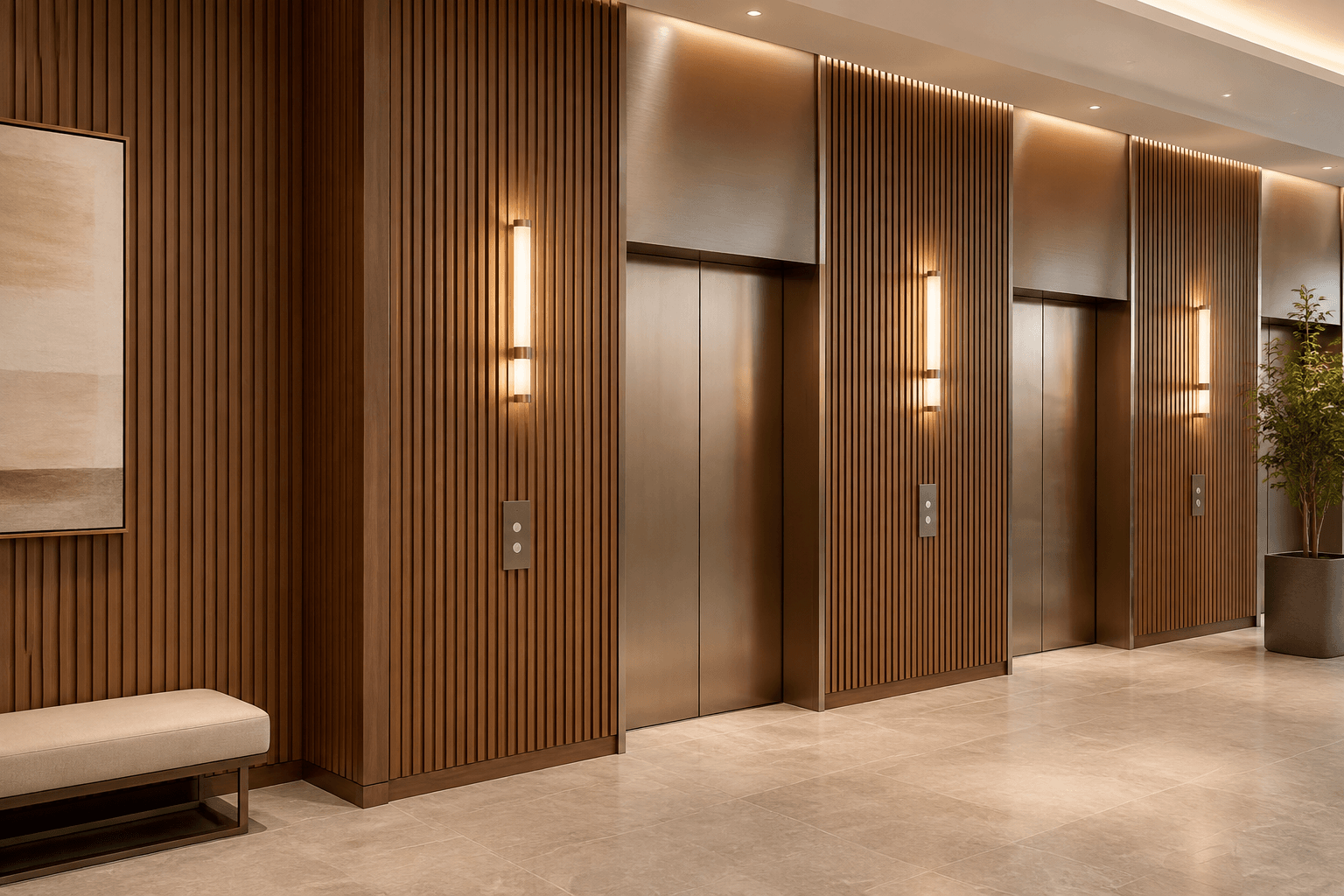
Choosing hollow vs solid WPC wall panels requires more than comparing weight or the price per meter. Profile geometry, installation conditions, and verified performance determine whether either option suits your project. Neither description automatically establishes structural capacity or impact resistance.
For most procurement decisions, compare complete installed wall systems against the same specification. Obtain drawings, relevant test reports, packing information, and installation instructions before approving a substitution. This approach makes quotations comparable and exposes costs hidden behind a low unit price.
This guide explains which differences matter for distributors, contractors, and project purchasing teams. It also shows how to evaluate samples without treating appearance as engineering evidence.
What Hollow and Solid Profiles Actually Tell Buyers
Hollow profiles contain internal cavities separated by webs. Solid profiles contain material across their section, although decorative surface grooves may remain. Both descriptions concern geometry rather than a universal material grade.
A hollow design can reduce material volume for a particular external size. However, actual weight also depends on formulation, wall thickness, and reinforcement. A heavier board does not automatically offer better quality or longer service.
Solid boards avoid internal chambers, but that alone does not establish acceptable fixing distances. Their performance still depends on material properties, dimensions, temperature, and support conditions. Ask suppliers to identify the exact profile covered by each claimed result.
Separate Material Properties From Profile Performance
A laboratory specimen can describe a material property without representing the complete extrusion. A whole profile includes joints, cavities, corners, and fixing interfaces. These features can influence installed behavior beyond the underlying compound.
The ASTM guide for evaluating WPC products addresses mechanical and physical evaluation. It supports selecting relevant evidence rather than assuming one test answers every purchasing question. Confirm test applicability with your technical reviewer.
Request a section drawing that identifies total depth, face thickness, web thickness, and usable coverage. Check whether quoted width includes the connecting tongue. This distinction affects both material calculations and installation planning.
Define the Application Before Comparing Profiles
An interior decorative wall and an exposed facade can require different evidence. Traffic, weather, support design, and cleaning practices also change the selection. Write these conditions into the inquiry rather than expecting suppliers to infer them.
Use the wholesale WPC wall panel supplier guide to coordinate the broader sourcing specification. Then compare hollow and solid alternatives within that agreed application. Avoid combining unrelated interior and exterior offers in one price ranking.
Load-Bearing and Impact Resistance Need Separate Evidence
The phrase solid WPC panel load bearing can confuse decorative cladding with structural construction. Treat a panel as cladding unless suitable engineering documentation establishes another permitted use. Do not suspend cabinets or equipment from decorative boards without an approved load path.
Fixtures may require connections directly into suitable backing or the supporting structure. The project designer should specify those connections and any necessary penetrations. A sample that feels rigid cannot establish a safe fixing detail.
Ask What the Load Test Represents
For any stated capacity, request the test setup and acceptance criteria. Identify specimen dimensions, support spacing, loading direction, conditioning, and failure mode. Check whether the result covers the profile currently being quoted.
A central bending load differs from fastener pull-through or a concentrated fixture load. Published values should identify their units and intended interpretation. Avoid treating a peak failure result as an allowable design load.
Long exposure can introduce behavior that a brief demonstration does not reveal. Ask the reviewer whether sustained loading or environmental conditioning matters for your application. Do not choose safety factors from unrelated products or internet examples.
Compare Impact Conditions Fairly
Impact resistance depends on the location and type of contact. A trolley strike near an unsupported edge differs from contact over a backing member. Hollow and solid specimens must face comparable conditions before their results become useful.
Request information about impactor shape, energy, temperature, support arrangement, and assessment criteria. Ask whether the test records cracks, permanent deformation, or surface damage. Cosmetic acceptance and continued serviceability are separate purchasing considerations.
For high traffic areas, evaluate corners, trims, and replacement access alongside the board itself. A robust panel can still leave vulnerable junctions. Mockups help identify these interfaces before the bulk order fixes the detail.
| Comparison item | Hollow profile review | Solid profile review |
|---|---|---|
| Section geometry | Check faces, webs, and chamber layout | Check full section dimensions and grooves |
| Fixing interface | Confirm permitted locations and support | Confirm fastener and edge requirements |
| Impact evidence | Match tested profile and backing | Match tested thickness and backing |
| Handling | Review unsupported lengths and packing | Review weight and lifting requirements |
| Replacement | Check access to damaged sections | Check access to damaged sections |
Compare Total Installed Cost on an Equal Basis
A hollow WPC panel cost quotation may look attractive because it uses less material. That advantage only matters if the profile meets the required application. Compare approved alternatives rather than buying geometry alone.
Request both price per piece and price per usable square meter. Include the supplied length, effective coverage, currency, quantity basis, and delivery terms. Without these fields, apparently similar offers can represent different quantities of finished wall.
Build a Comparable Cost Schedule
Separate the panel price from accessories, backing, labor, handling, and expected cutting waste. Ask which clips, trims, fasteners, and packaging are included. Identify assumptions requiring confirmation rather than silently assigning them zero cost.
Transport planning needs actual packed dimensions and weights. Hollow profiles do not guarantee a particular container quantity. Carton arrangements, protective materials, pallet dimensions, and shipping constraints can change the practical load.
Request a packing proposal showing pieces per carton, cartons per pallet, and measured gross weight. Have the freight team assess the complete load. Do not estimate shipment savings from the panel cross section alone.
Use the custom lengths and profiles guide when cutting yield affects the comparison. A length suited to the wall layout may reduce offcuts. However, longer packs can introduce handling and delivery constraints.
Include Damage and Reordering Exposure
Evaluate whether the proposed packaging protects faces, corners, and connections. Ask how packs can be moved at the destination without damaging the profiles. Review unloading conditions before accepting a packing design developed for another project.
Replacement costs include access, dismantling, matching, and disruption. Discuss retained samples and spare quantities during procurement. Avoid assuming a later production batch will match the original finish perfectly.
Compare the same inspection and complaint procedures across suppliers. A low quotation may exclude the documentation or accessory coordination your team needs. List these differences explicitly instead of hiding them within a single adjusted price.
Use Samples to Check Workmanship
Inspect samples under realistic lighting and alongside adjacent materials. Check visible edges, chamber consistency, surface defects, and connection fit. Record observations against the approved drawing rather than relying on memory.
Measure multiple pieces when reviewing dimensional consistency. One attractive sample cannot establish a production distribution. Agree the inspection method and acceptance rules before manufacturing begins.
Ask for samples representing the proposed production route and finish. Identify samples clearly with their profile codes and revision dates. Retain the accepted set for the supplier, installer, and receiving team.
Turn the Comparison Into an Orderable Specification
A useful purchasing decision connects performance requirements with a specific profile and installation method. It also identifies the evidence still missing. This prevents a preferred sample from becoming an undocumented bulk substitution.
Browse the WPC wall panel category to identify profiles for a focused inquiry. Request current technical documents for shortlisted options. Category descriptions should start the discussion rather than replace model-specific approval.
When contacting ZHONGXINGWO, provide the wall application and destination requirements. Include drawings, exposure conditions, estimated quantities, and the intended fixing approach. This makes the response more useful than a request based solely on unit price.
Establish a Clear Approval Sequence
First, confirm whether both proposed profiles are suitable candidates for the intended application. Next, compare their documentation against the same acceptance requirements. Then review installation and packing implications before negotiating the final commercial package.
Keep technical acceptance separate from sample color approval. A signed finish sample does not approve structural performance or installation details. Each approval should identify its scope and the responsible reviewer.
Before production, confirm that the purchase order references the accepted profile revision. Include the agreed finish, length, usable coverage, and accessory schedule. Ask how the supplier will notify you about proposed changes.
Questions Worth Resolving Before Deposit
- Which exact section drawing identifies the quoted hollow or solid profile?
- Do test reports match the proposed material, finish, and profile dimensions?
- Which supporting structure and installation conditions apply to the stated results?
- Are fixtures independently supported through an approved connection detail?
- What usable coverage, packing arrangement, and accessory quantities support the quotation?
- Which samples and inspection records will define bulk delivery acceptance?
If a supplier proposes replacing one construction with another, repeat the relevant checks. A matching external size does not establish equivalent behavior. Treat the substitution as a technical and commercial revision requiring documented agreement.
Hollow profiles may suit one project’s handling and cost priorities. Solid profiles may suit another project’s geometry or installation needs. The better choice is the documented option meeting the complete specification at an acceptable installed cost.
Maintain a comparison sheet recording confirmed facts, open questions, and the evidence owner. Update it when revised drawings or quotations arrive. This creates a clear purchasing record for the first shipment and subsequent orders.
Join our official LINE account to ask your questions. Our specialist will contact you right away.
