

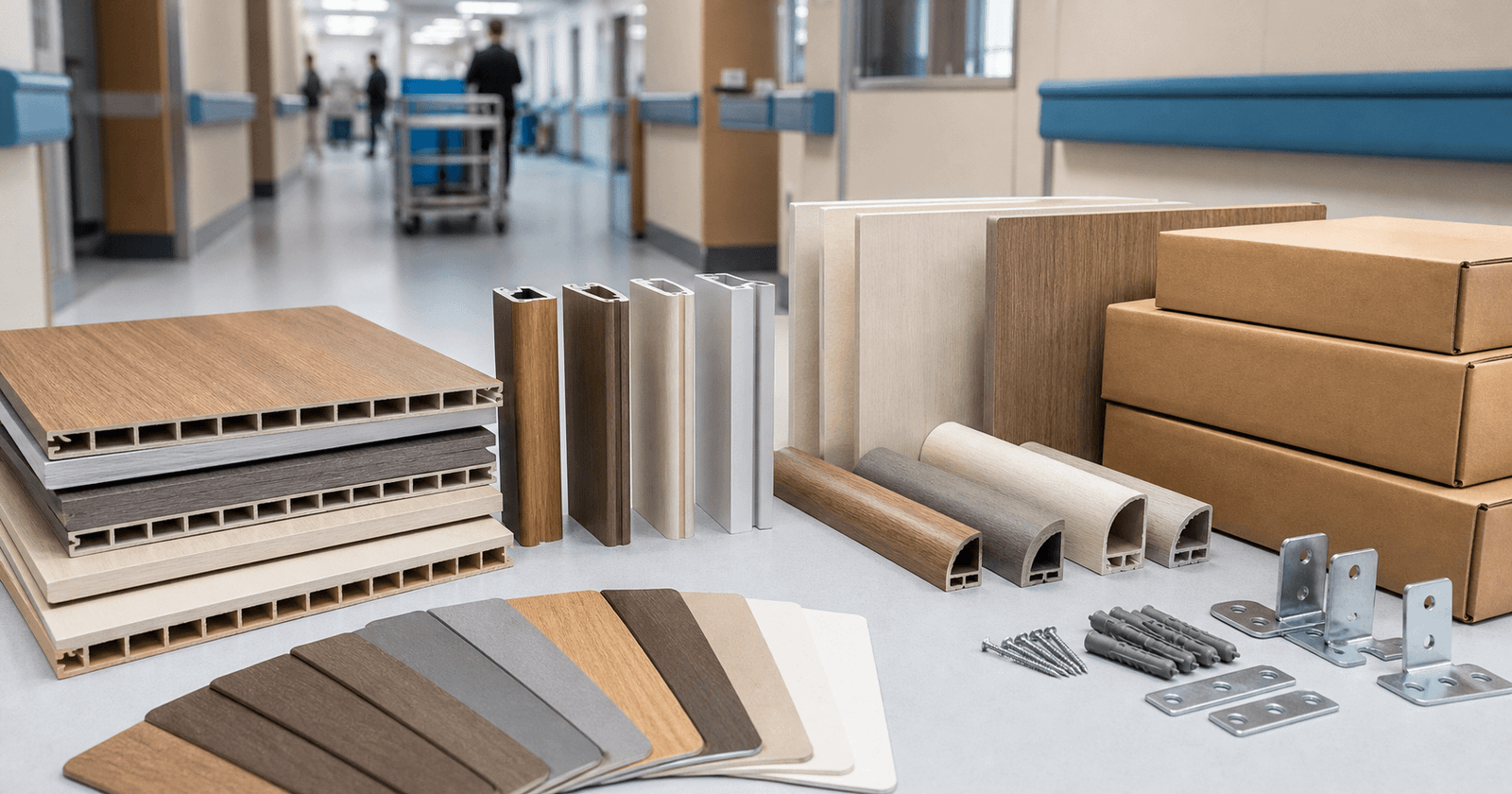
WPC wall panel maintenance and lifespan depend on the supplied construction, exposure, installation, and ongoing care. A fixed lifespan should not be promised without product-specific supporting evidence. Buyers should distinguish expected service behavior from a contractual warranty and its conditions.
For exterior projects, request the manufacturer’s maintenance instructions before ordering. Build an inspection and cleaning plan around the actual facade and its access arrangements. This is more useful than assuming that every WPC surface needs identical treatment.
This guide explains how owners, contractors, and distributors can organize that plan. It provides purchasing and maintenance questions without inventing a universal cleaning interval or guaranteed service life.
Separate Service Life, Appearance, and Warranty
An exterior WPC cladding lifespan discussion can refer to several different outcomes. The panel may remain installed while its appearance changes or accessories require attention. Clarify which outcome a supplier is describing before comparing claims.
Ask whether the claim concerns surface appearance, material condition, fixing performance, or the complete wall system. Request the conditions and evidence supporting it. A statement about one aspect should not become a guarantee covering every component.
Read Warranty Terms as a Separate Document
A warranty describes contractual coverage, exclusions, and remedies. Its duration alone does not establish that all performance remains unchanged throughout that period. Obtain the actual terms for the specific product and destination.
Check which party provides coverage and what records a claim requires. Review any requirements concerning installation, maintenance, inspection, and notification. Ask for clarification where the wording does not match the intended project use.
Do not advertise a 25-year service life simply because another product uses that number. Keep distributor descriptions aligned with the documentation for the supplied model. Unsupported lifespan language can create expectations beyond the agreed offer.
Understand What Weathering Tests Can Show
Accelerated exposure provides information under a specified laboratory procedure. It does not automatically predict a fixed number of outdoor years. Review specimen identification, exposure conditions, and the properties assessed.
The ASTM fluorescent UV exposure practice concerns operation of exposure apparatus. A reference to that practice alone does not establish a lifespan calculation. Ask the reviewer how any reported results relate to the proposed application.
Use the co-extrusion and UV comparison guide when discussing finish protection and appearance evidence. Keep comparisons within equivalent test conditions. Avoid ranking unrelated reports by their exposure hours alone.
Identify the Facade’s Actual Maintenance Exposure
Two walls on the same building can experience different service conditions. Orientation, shelter, surrounding vegetation, and nearby activities can influence maintenance needs. Record these differences instead of applying one informal routine everywhere.
The wholesale WPC wall panel supplier guide connects exposure assessment with the original purchase specification. Retain that specification after handover. It gives maintenance teams a starting point for understanding the installed construction.
Map Water and Dirt Sources
Identify runoff paths, lower wall zones, openings, and locations receiving repeated splashes. Check whether adjacent construction directs water or debris onto the cladding. Ask the building team to investigate persistent sources rather than repeatedly cleaning the visible symptom.
Look for locations where leaves or other debris can obstruct intended drainage. Review them using the approved access arrangements. Do not dismantle components or modify openings without understanding their purpose.
Where humid conditions matter, consult the tropical moisture verification guide. Material water resistance does not replace the wall’s designed water management. Maintenance should support that arrangement rather than unintentionally obstruct it.
Consider Contact and Adjacent Activities
Loading areas, landscaping, cleaning equipment, and maintenance trades can expose lower walls to contact. Note these interfaces during inspections. The solution may involve operational changes rather than repeated surface treatment.
Record any nearby work involving coatings, solvents, or building cleaning. Protect the cladding according to the applicable product instructions. Ask the supplier about compatibility before another trade applies a new substance nearby.
For elevated areas, define access through the building’s authorized arrangements. Maintenance personnel should not improvise access using the cladding. The owner and responsible contractor should coordinate suitable methods.
Use a Product-Specific Cleaning Procedure
A WPC panel maintenance guide should identify the model and finish it covers. Ask for permitted cleaning agents, tools, and application limits. Generic advice for another composite product may not suit the installed surface.
Begin by identifying the deposit or stain and its likely source. Dirt, biological growth, paint transfer, and chemical contamination can require different responses. If the cause is uncertain, request guidance before increasing the cleaning intensity.
Test the Proposed Method First
Use an inconspicuous location or an agreed retained sample when checking a cleaning method. Follow the supplier’s instructions and record the result. Assess both immediate appearance and any subsequent changes before expanding the treatment.
Avoid prescribing universal chemical concentrations or equipment settings. The appropriate limits depend on the surface and approved cleaning procedure. Obtain written guidance for unfamiliar conditions rather than using escalating trial and error.
Do not assume pressure washing, abrasive brushing, or solvent cleaning is permitted. Ask specifically about each proposed tool and chemical. Include contractors in that discussion so the agreed method reaches the people doing the work.
Preserve the Surface and Assembly Details
Cleaning should not remove protective finishes or force debris into important joints. Follow the approved approach around corners, openings, and penetrations. Report loose or damaged components for review before treating the area.
Avoid painting, sanding, or applying restorative coatings without product-specific approval. Such treatments can change appearance and complicate later maintenance. Ask how any proposed repair affects the relevant warranty terms.
Keep cleaning records with the building documents. Include the location, observed condition, method, product used, and outcome. These records help identify recurring issues and support clearer discussions with suppliers.
| Observed condition | First review step | Information to retain |
|---|---|---|
| General surface dirt | Check approved cleaning instructions | Method and result |
| Persistent wet area | Investigate water source and drainage | Location and recurring conditions |
| Local discoloration | Identify deposit and review compatibility | Photographs and treatment history |
| Cracked or loose component | Refer for technical inspection | Product identity and affected area |
| Repeated contact damage | Review adjacent operations | Damage pattern and proposed protection |
Inspect Joints, Fixings, and Damage Through a Clear Process
Maintenance should consider the assembly as well as the visible face. A clean surface does not confirm that every connection or junction remains satisfactory. Establish inspection responsibilities and the conditions requiring specialist review.
Ask the designer and supplier what components should be inspected and how they can be accessed. Agree an initial inspection plan suited to the building. Review that plan when actual service observations justify a change.
Define What Gets Reported
Record the location and extent of visible movement, cracking, loose trims, or damaged junctions. Include photographs with a scale where practical. Do not assume the visible symptom establishes the underlying cause.
Use consistent references for elevations and wall zones. That makes observations comparable between inspections and different contractors. A repeatable record is more useful than scattered photographs without location details.
If a component appears insecure, follow the building’s procedure for managing the affected area. Ask the responsible professional to assess it. Do not conceal the condition with an improvised fastener or sealant repair.
Review Replacement Before Removing Panels
Identify the installed profile, finish, and fixing arrangement before ordering replacement material. Check whether adjoining panels or trims need removal. The original supplier or installer may need to clarify the access sequence.
Compare replacement samples under relevant lighting before approval. A later batch may differ from weathered material already on the building. Discuss the visual outcome rather than assuming a matching code guarantees an invisible repair.
Keep spare stock according to the product’s storage guidance. Label it with model, finish, batch, and project references. Unidentified spare boards provide limited value when a repair is needed years later.
Investigate Repeated Problems
If the same condition returns, review the surrounding detail and exposure. Repeated cleaning or replacement may leave the cause unresolved. Coordinate the investigation with the responsible designer, contractor, and supplier.
Record any approved corrective detail and update the maintenance documents. Future teams should know why the change was made. This prevents a successful repair from being reversed during another visit.
Include Maintenance Information in the Original Purchase
When comparing the WPC wall panel range, request maintenance documents for the proposed construction. Check them before selecting an option requiring difficult access. Service requirements can affect the practical value of the purchase.
Ask ZHONGXINGWO for current model-specific care instructions and applicable warranty terms. Provide the intended exposure and building location. Avoid assuming that a general product description covers every service condition.
Prepare a Complete Handover File
Retain the accepted drawings, finish samples, product identification, and installation records. Add maintenance instructions and contact information for technical questions. Assign responsibility for keeping the file available after the project team leaves.
- Distinguish expected service life from contractual warranty coverage.
- Map exposure and access before setting inspection routines.
- Obtain approved cleaning methods for the actual finish.
- Record observations and investigate recurring conditions.
- Keep replacement references and revised details with the building documents.
An evidence-based maintenance plan cannot promise a universal lifespan. It can help teams recognize changes, protect the approved construction, and make informed repair decisions. That is a stronger basis for long-term ownership than an unsupported year count.
Join our official LINE account to ask your questions. Our specialist will contact you right away.
